
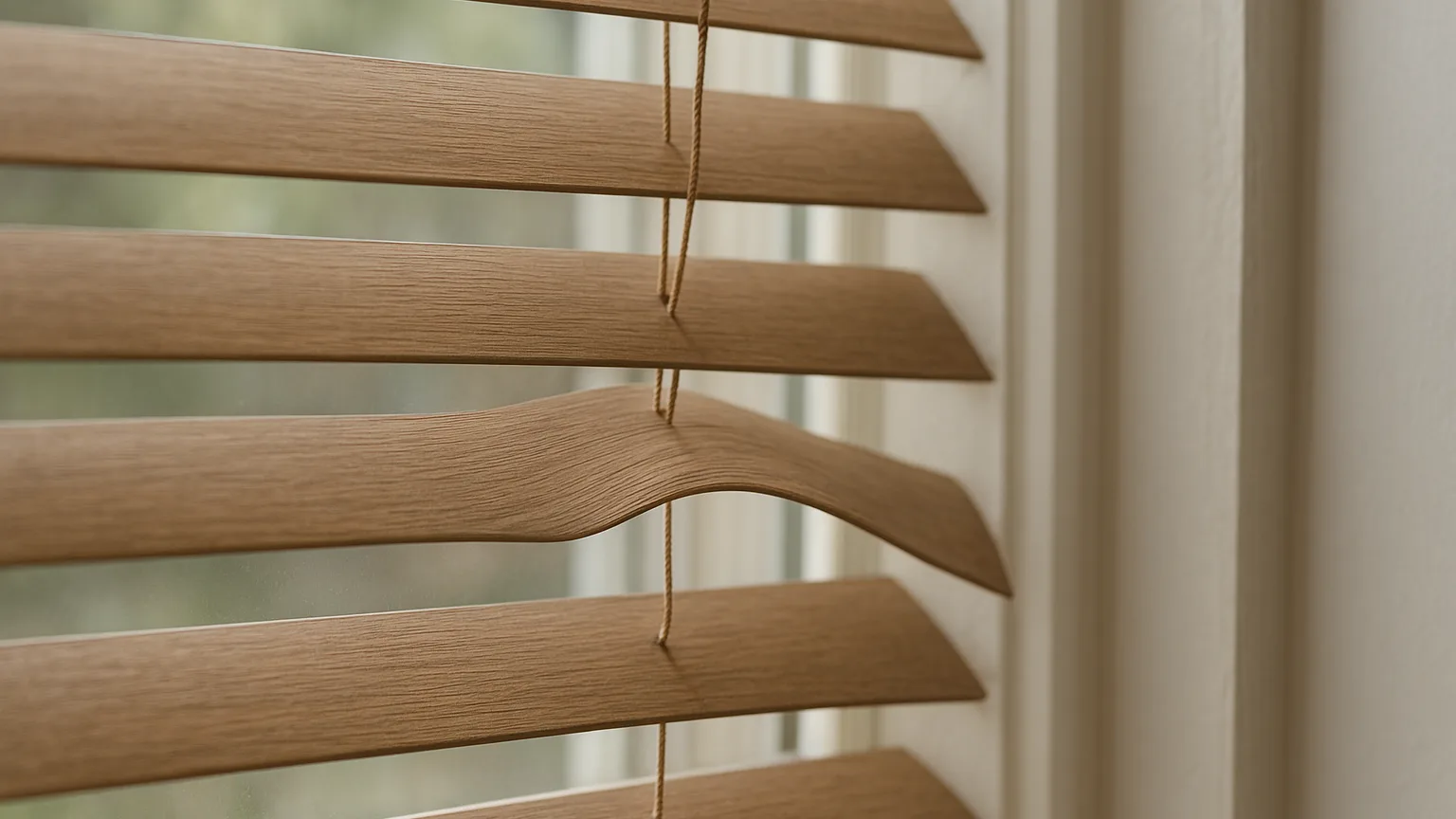
The Quiet Reasons Faux Wood Blinds Go Wrong
A three-part series on faux wood blinds: sizing and humidity, the details that read custom, and the upkeep that stops yellowing before winter.
Faux wood blinds are the most ordered window covering in American homes, and also the most quietly disappointing. They look sharp in the showroom and sharp on day one. Then a season passes. A slat bows in the south-facing bedroom. The white looks a little butter-colored next to the trim. The valance sits crooked and nobody can say why.
It also helps to spend a minute on privacy faux wood blinds before settling on an approach.
There is a deeper practical look at faux wood vertical blinds for anyone weighing the options.
A closer read on inch faux wood blinds covers this exact tradeoff in more depth.
This series is for homeowners who already own faux wood blinds or are about to buy them, and who want to know what goes wrong before it goes wrong. It is also for anyone who has stood in front of two nearly identical products with a $40 price gap and wondered what the difference actually buys. Product guidance from Blinds Chalet, a longtime online blind retailer, helped shape the material and hardware details covered across the three parts.
The thread running through all of it is simple. Faux wood fails for reasons that are decided early, usually at the measuring stage, and then hidden by good lighting until the blind has been hanging for a few months. The parts below walk through those decisions in the order they happen: buying, finishing, and living with them.
Read the Series

Part 1: The "Perfect Fit" Trap That Leaves Homeowners With Warped Blinds by Midsummer
Uncovers the overlooked measuring and material-spec decisions — inside vs. outside mount, slat width, humidity ratings — that quietly determine whether faux wood blinds hang beautifully or bow within a single season.
Part 2: Why Your Neighbor's Faux Wood Blinds Look Custom and Yours Look Cheap
Reveals the finishing details installers rarely mention — valance choice, cord versus cordless lift, slat routing, and color undertones — that separate builder-grade window coverings from a designer-caliber result.
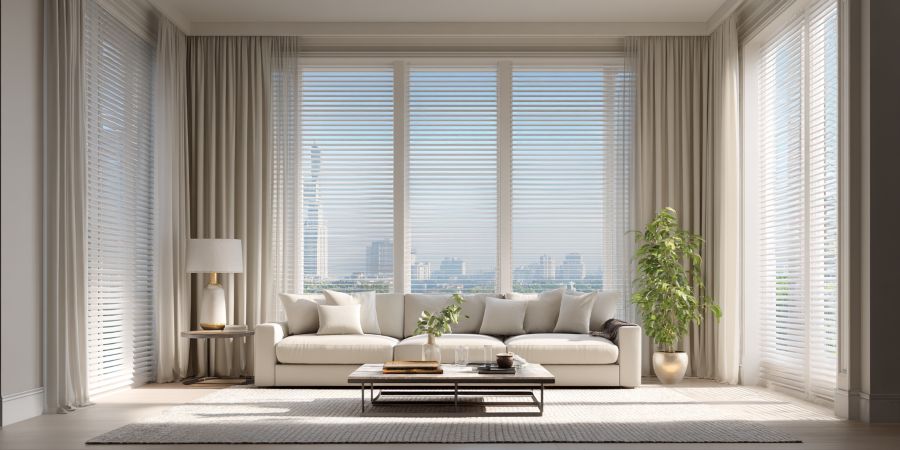
Part 3: The Cleaning Habit That's Slowly Yellowing Your Blinds (and the 5-Minute Fix)
Explains the maintenance missteps and environmental culprits that dull, sag, and discolor faux wood over time, plus a simple upkeep routine to keep them bright before winter light exposes every flaw.

Where Warping Actually Starts
The first stretch of the series deals with fit and material spec. Most warped blinds were not defective. They were mounted in a way that trapped heat, or cut from a formula that was never rated for the room it went into. A bathroom, a kitchen window over a sink, and a west-facing living room each put different stress on a PVC or composite slat.
Part one covers the decisions that matter most at the measuring stage:
- Inside versus outside mount and how each affects airflow behind the slats
- Slat width, and why a 2 inch slat behaves differently than a 2.5 inch slat on a tall window
- Humidity and heat ratings, including which composites soften and which hold shape
- Deduction rules, the eighth-inch differences that cause light gaps or binding
It also explains why blinds mounted too tight against the glass on a sunny elevation start to bow near the middle of the stack first. That midsummer sag is predictable, and it is preventable.
The Details That Read as Custom
The second part shifts from function to appearance. Two homes can hang the same slat and get completely different results, because the finishing choices were different. Valance style is the big one. A flat builder valance with visible mounting screws reads cheap from across the room, while a returned or crown valance wraps the frame and hides the hardware.
Lift Systems and Routing
Cord versus cordless changes both safety and the front face of the blind. Routeless and rear-routed slats close tighter, which matters in bedrooms, and the same logic drives choices around faux wood privacy options in street-facing rooms. Homeowners comparing cordless 2 inch blinds against corded versions usually find the difference shows up most when the blind is fully closed, not fully open.
Color Undertones
White is not one color. Bright white, off-white, and cream sit very differently against painted trim, and a mismatch of one shade is the single most common reason a new blind looks like a rental. On wide sliders, textured grain vertical blinds solve the same problem in a different format, since a smooth vane next to real wood trim can look flat.

The last part of the series is about what happens over years, not seasons. Faux wood does not usually fail all at once. It dulls. Kitchen grease binds to dust and forms a film that holds heat and traps grime. Household cleaners with ammonia or bleach strip the UV coating from the surface, and once that coating is gone, sunlight does the rest. The yellow that shows up in January was set in motion the previous spring.
It covers what to wipe with, how often, and what to stop doing entirely, plus the quick routine that keeps slats bright and the ladder cords from sagging. Winter light comes in at a low angle and lights up every streak, so late fall is the honest test.
Working Through the Three Parts
Reading in order gives you the full arc, from measuring to finishing to maintenance. That is the best route if you are shopping now or replacing blinds in more than one room.
If your blinds are already up, start wherever your problem lives. Warping and light gaps belong to the first part, a builder-grade look to the second, and dullness or discoloration to the third. Each part stands on its own.
To request a free estimate on Windows replacement, Sliding glass doors or french doors, call us today!

Get An Instant Quote!
We’ll deliver Your Custom Quote Within 24 Hours!