
When Your Own Windows Cook Your Backyard
Some low-E window coatings bounce desert sun back onto your patio and warp everything it touches. Here is how to spot it and what to order instead.
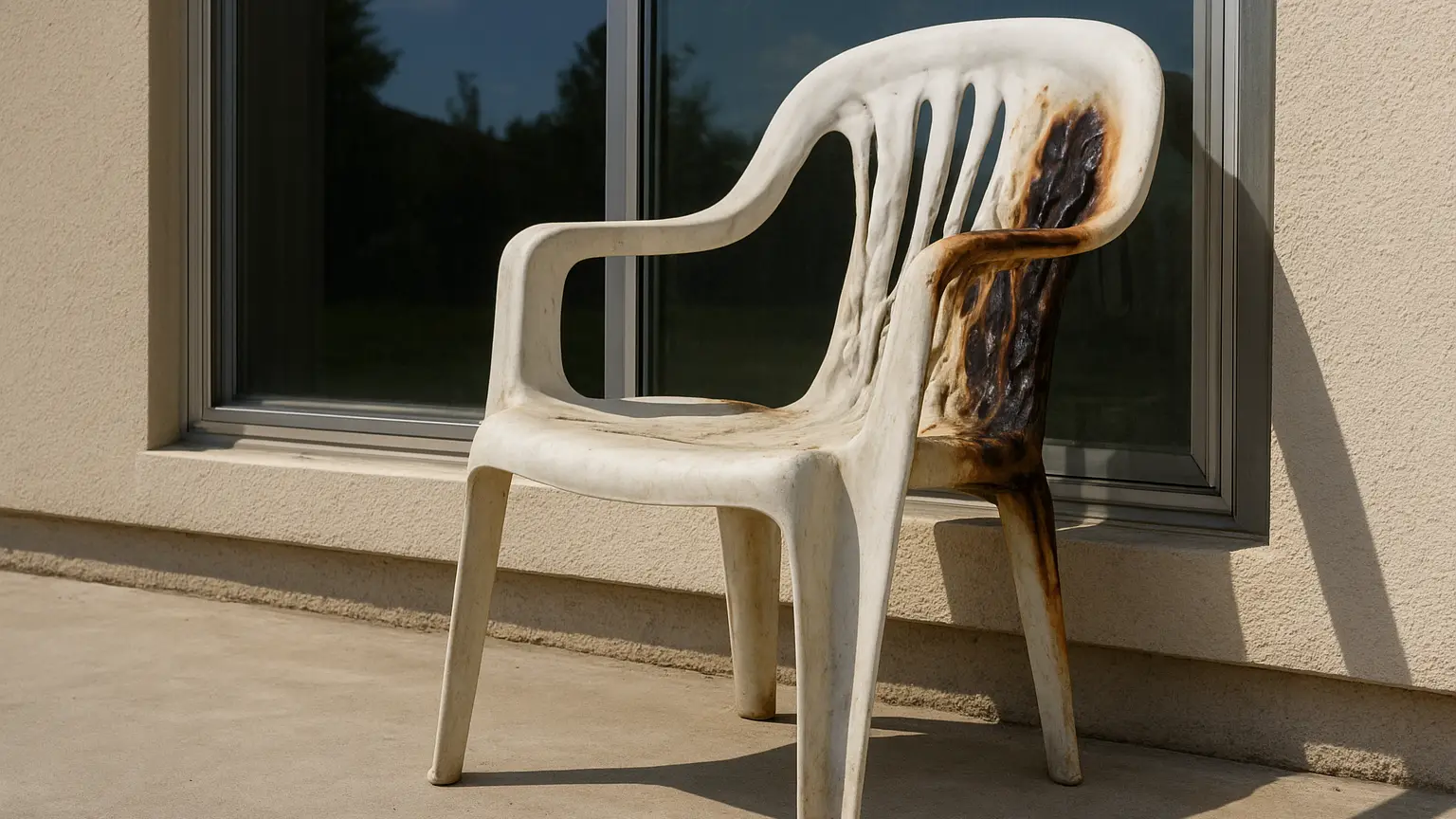
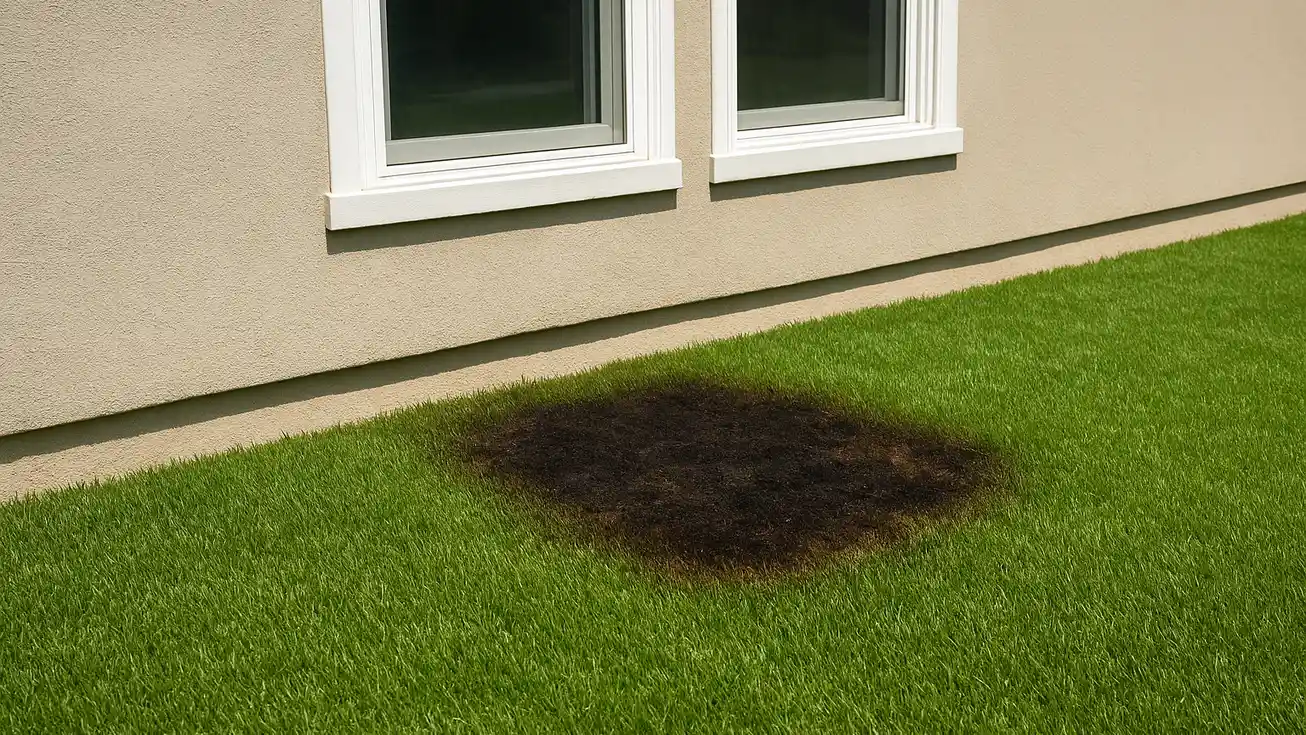
You bought new windows to stay cool. Then your patio chair sagged on one side. Your neighbor's vinyl siding developed a wavy ripple. A rectangle of your artificial turf turned crispy and dark while the rest of the yard looked fine.
Most homeowners blame the sun in general. It is Arizona, after all. But the shape of the damage tells a different story. Plain sunshine fades things evenly. A focused beam melts things in a pattern: a stripe, an oval, a sharp-edged patch. That pattern usually points back to a window, and more specifically to the coating on the glass and the way that glass sits in the frame after a hot afternoon.
The Short Version of What Is Happening
Modern energy efficient glass works by reflecting solar heat away from your home. That is the entire point, and it works. A good desert-rated window can knock a serious amount of heat load out of a west-facing room.
The problem is that the heat has to go somewhere. Insulated glass units are sealed pockets of air or argon between two panes. When that sealed air gets hot it expands and pushes outward; when it cools overnight it contracts and pulls inward, creating a very slight concave curve in the outer pane. You cannot see it by eye. But a concave mirror does one thing extremely well: it focuses light into a point. Add a highly reflective coating and you have built a low-power solar concentrator on the side of your house.
Temperatures inside those focused beams have been measured well above what vinyl, PVC, and synthetic turf backing can handle. Vinyl siding starts to soften somewhere around 160 to 165 degrees. Artificial turf fibers, usually nylon or polyethylene, slump lower than that. Resin patio furniture is in the same range.
Why Arizona Homes Get Hit Harder
Three things stack up here that do not stack up in Ohio.
- Sun angle and intensity. Phoenix and Tucson get direct, high-intensity sun most of the year, and the low winter sun angle is exactly the angle that aims reflections at ground level objects like furniture and turf.
- Extreme temperature swings. A 40 degree drop between afternoon and pre-dawn is normal here, and bigger swings mean more pane flex, more curve, tighter focus.
- Tight lot spacing. Newer subdivisions put houses ten to fifteen feet apart, right in the focal range for many window sizes, so your glass hits your neighbor's wall instead of scattering into open air.
“We get calls every spring from homeowners in Paradise Valley and Scottsdale who think their patio set was defective,” says Marisol Vega, senior glazing consultant at Affordable Windows. “Nine times out of ten we walk out back, look at the melt line, look up at the second story glass, and the geometry explains itself in about thirty seconds.”
Not All Low-E Glass Behaves the Same Way
Low-E glass is the single best upgrade available for a hot climate, so do not swear it off over one story about melted siding. What matters is which type you get and where it sits in the glass unit.
Soft Coat vs Hard Coat
Hard coat low-E, sometimes called pyrolytic, is baked onto the glass during manufacturing: durable and less reflective. Soft coat is applied in a vacuum chamber and has to live on a protected interior surface of the sealed unit. It blocks far more heat, and it reflects far more, which is where the trouble starts.
Silver Layers and Mirrored Add-Ons
Soft coat comes in single, double, and triple silver versions. More silver layers mean better heat rejection and higher exterior reflectance. Triple silver, common in premium desert packages, throws back the most energy; it is genuinely excellent glass that simply needs to be specified with reflection in mind. The worst offenders are stacked systems: a soft coat unit that also carries reflective film on its outer surface, or mirrored solar control glass. Homeowners sometimes add aftermarket mirror film to already-coated windows to fight glare, then wonder why the lawn furniture started deforming that same summer.
“Stacking film over a triple silver unit is the one thing we ask people to stop doing, because you are doubling the reflectance on glass that was already engineered to bounce heat,” says Devin Kaur, product manager at Affordable Windows. “If glare is the real complaint, an exterior screen solves it without turning the pane into a mirror.”
The Coating Combinations Most Likely to Concentrate Heat
- Triple silver soft coat in a large sealed unit, especially casement or picture windows over 30 inches wide
- Reflective or mirrored exterior films layered on existing low-E glass
- Tempered glass with soft coat low-E, since tempering leaves slight surface waves that add focusing power
- Any coated unit in a flexible vinyl frame, which allows more pane movement than aluminum or fiberglass
- Second story windows facing a wall or patio within roughly ten to twenty feet
Frame material matters more than people expect. A stiff frame resists the flex that creates the curve, which is why the frame conversation should never be an afterthought, and it becomes especially important when west-facing rooms fail every summer since those rooms usually get the largest and most heavily coated glass in the house.
How to Confirm a Window Is the Culprit
You do not need equipment, just timing. Start with the damage itself and look for a defined edge. Melted vinyl from a reflection usually forms an oval, a crescent, or a narrow band, often shinier inside the affected zone. Sun damage across a whole wall looks uniform and chalky instead.
Then go outside and watch. Reflections track like a sundial, so the beam lands on a given spot for maybe 30 to 90 minutes a day, and it shifts through the seasons. On a clear afternoon, stand near the damaged object and look back toward the house; if a specific pane glares brightly enough that you squint, that is your window. Put your palm on the damaged surface during that window of time, and if it is noticeably hotter than the surface a foot away, you have confirmed the focus point. A cheap infrared thermometer makes this obvious, with readings 40 to 80 degrees above the surrounding surface common. One more clue people miss: glass that looks funhouse-mirror-ish from an angle has taken on curve, so sight down your exterior wall and flag anything that ripples the reflection of a straight roofline.
<<
Ordering Glass That Keeps Your Home Cool Without Torching the Yard
The fix is not weaker glass. Nobody in Arizona should downgrade thermal performance to protect a patio chair. The fix is smarter specification, and most of it costs little or nothing if you ask before the order is placed rather than after.
Ask for These Specs by Name
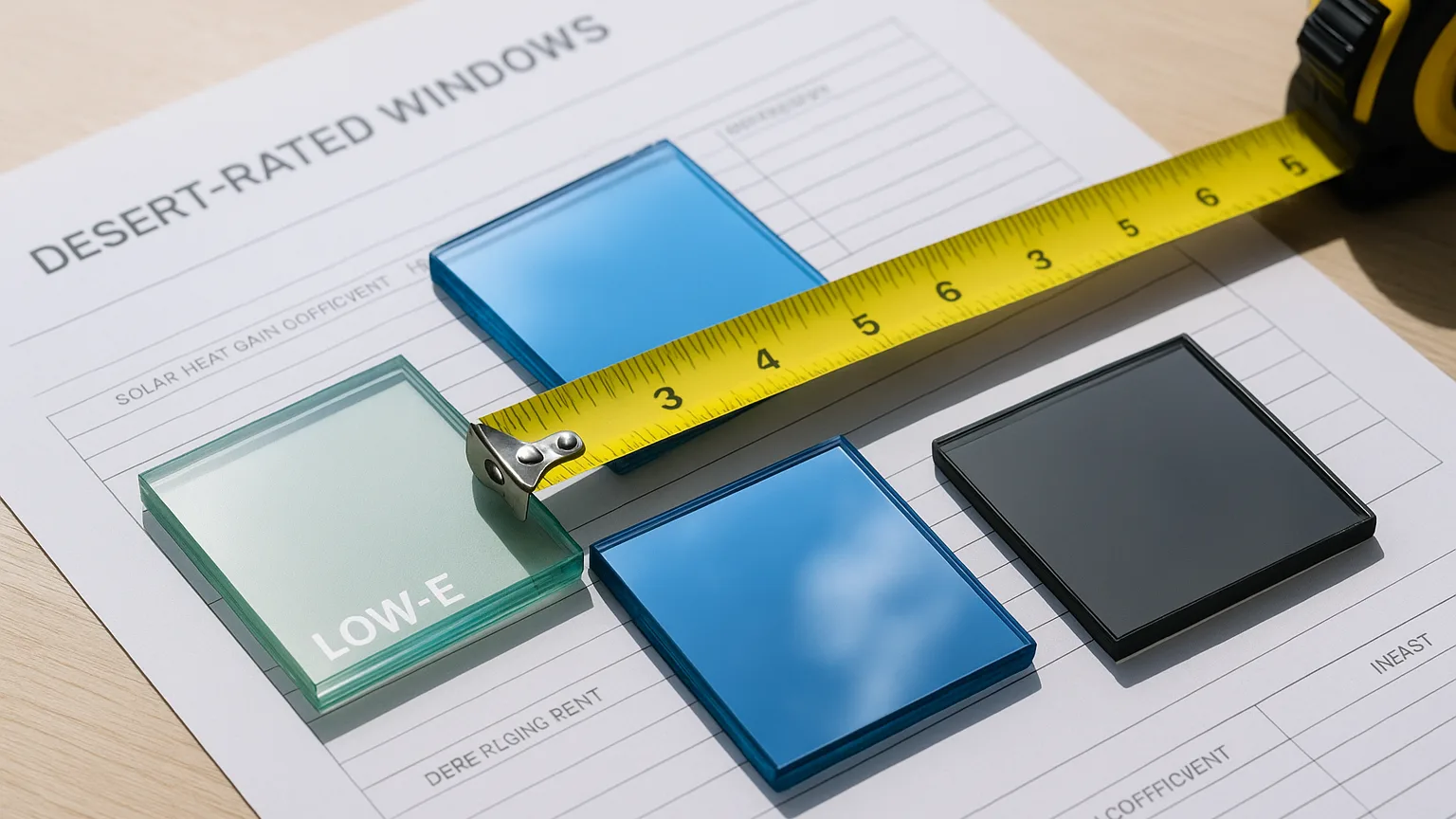
- Exterior visible reflectance under 15 percent. It is on the glass spec sheet even though it rarely appears on the sticker. Ask for it in writing.
- Solar heat gain coefficient between 0.20 and 0.25. The sweet spot for desert performance without pushing into maximum-reflectance territory.
- Coating on surface two or three, never the outer face. Inside the sealed unit, the reflective layer bounces less glare and stays protected from dust storms and hard water.
- Heat strengthened rather than fully tempered where code allows, since it stays flatter.
- Capillary or breather tubes on units going into homes above 3,000 feet, which covers Prescott, Flagstaff, and Payson. They equalize internal pressure and cut pane flex dramatically.
- Warm edge spacers with a stiffer profile, which resist the pull that creates concave curve.
Design Choices That Break Up the Beam
Geometry is your friend. Smaller panes cannot form a tight focal point, so divided lights, grids between the glass, or transom-and-fixed combinations naturally scatter reflection, and operable windows in stiffer frames flex less than big fixed picture units. Overhangs, exterior sunscreens, shade sails, and deep-set openings cut the reflection at the source. If you are already rethinking how light moves through a room, some of the same principles apply to interior treatments that bring sunshine in without cooking anything on the way through.
What to Do About Windows You Already Own
- Install exterior solar screens on the offending panes; they diffuse the reflection and cut incoming heat at the same time.
- Add an awning, trellis, or shade structure between the window and the damaged area.
- Move the target. Relocating furniture eight feet often solves it permanently.
- Swap vulnerable materials for aluminum, powder coated steel, teak, or concrete in the affected zone.
- Plant a shrub or install a lattice panel to interrupt the beam path.
- Call your window company. Some manufacturers will replace a pane showing excessive deflection under warranty.
Also talk to your neighbors before you talk to a lawyer. Reflection damage between homes is common in tight Arizona subdivisions, and it is usually resolved with one shade screen and a handshake. Homeowners who buy in seasonally sometimes run into this after a summer away, which is one reason window style snowbirds regret installing is worth reading before signing off on a full-house glass package.
The Sun Only Wins If You Let It Aim
Energy efficient glass is not the villain here. Coated low-E windows are the most effective defense a desert home has against 115 degree afternoons, and nobody should walk away from that because of a warped chair. What deserves scrutiny is the combination of high exterior reflectance, big unsupported panes, flexible frames, and a target sitting fifteen feet away in the beam path. Change any one of those variables and the problem disappears. The homeowners who never deal with melted siding are the ones who asked two extra questions at the quote stage: what is the exterior reflectance on this glass, and where does the coating sit inside the unit? Find the odd-shaped scorch mark you have been ignoring and trace it back to the pane that made it. Once you know which window is doing the aiming, fixing it is the easy part.
To request a free estimate on Windows replacement, Sliding glass doors or french doors, call us today!
Get An Instant Quote!
We’ll deliver Your Custom Quote Within 24 Hours!