

Energy Savings
The Energy Bill Nobody Warned You About: Retractable Awnings vs. Window Upgrades
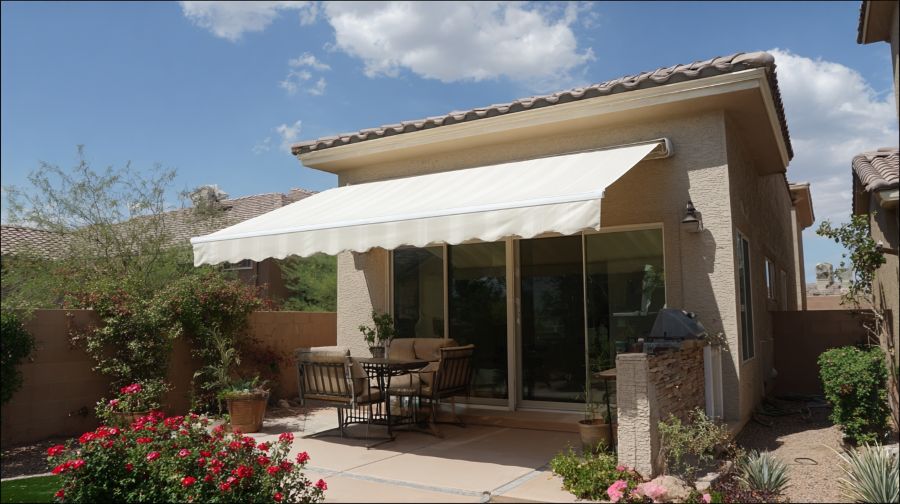
Every summer, millions of homeowners crank the air conditioning, watch their energy bills climb, and assume the solution is a full window replacement. That assumption costs a lot of money. Before signing any contract or ordering new glass, it is worth understanding that the sun's path into your home can be interrupted much earlier, and much cheaper, than most people realize. The upgrade conversation often begins at the wrong point in the chain, focusing on what is happening inside the glass rather than what is happening before the sun ever reaches it.
According to ENERGY STAR, certified windows can save homeowners an average of 12% on their annual energy bills when replacing older single-pane units. Those savings are real, but they come with a significant upfront price tag and a payback timeline that stretches years. Understanding how retractable awnings and window upgrades each attack the problem of solar heat gain, and what each one actually returns on your investment, is the most practical conversation you can have before spending a single dollar on home energy improvements.
How Solar Heat Gain Actually Works
Heat does not just drift into your home. It charges in through glass at full speed, especially during the peak afternoon hours when the sun hits west- and south-facing windows directly. Glass is a remarkably poor barrier against radiant solar energy. Even double-pane windows allow a significant portion of the sun's energy to pass right through and warm your interior surfaces, floors, and furniture. That warmth radiates into the air, and your air conditioner has to work continuously to counteract it.
This is why the framing of "better glass equals lower bills" only tells part of the story. Yes, improved window construction reduces conductive heat transfer and prevents conditioned air from leaking out. But solar heat gain through the glass itself is a separate problem, and it is one that exterior shading products like retractable awnings are specifically designed to address. The distinction matters enormously when you are calculating what each upgrade will actually do to your monthly bill.
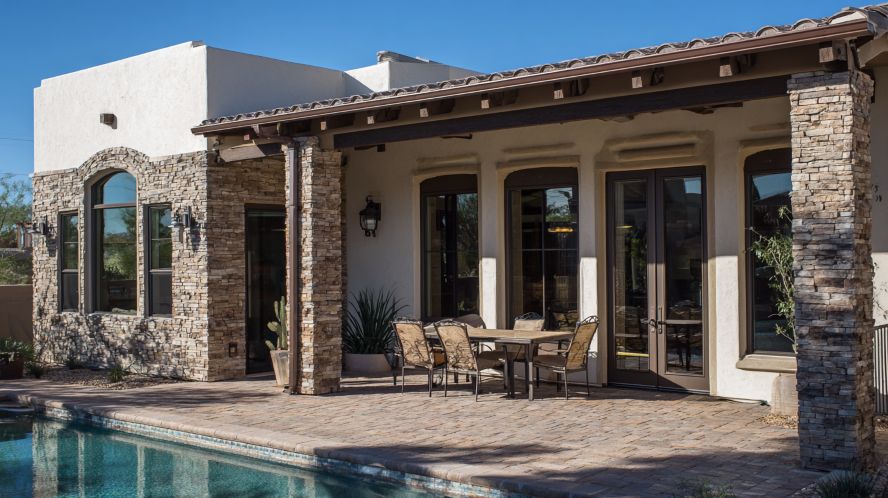
What Window Upgrades Actually Deliver
The Numbers Behind New Glass
Replacing old, worn windows is a legitimate home improvement with real energy benefits. Homes that still have single-pane windows are losing significant ground on both heating and cooling efficiency. Upgrading to ENERGY STAR certified double-pane windows can reduce energy bills by around 12% annually, which on average works out to somewhere between $125 and $340 per year for a typical home, depending on climate and square footage. For homes in extreme climates, triple-pane windows push those savings further, offering 20 to 30% better thermal performance than standard double-pane units.
The catch is the cost. Double-pane window installations typically run between $150 and $1,290 per window. Triple-pane windows average around $1,920 per unit and can climb as high as $3,540 for larger or custom frames. For a home with ten to fifteen windows, that is a substantial investment before a single dollar of savings appears on your bill. The payback period for triple-pane windows through energy savings alone can range from ten to twenty years, depending on your climate, utility rates, and how outdated your current windows are.
Where Windows Genuinely Shine
- Winter performance: Windows excel at reducing conductive heat loss during cold months, something awnings simply cannot address
- Air sealing: New window frames eliminate drafts and infiltration that drive up heating costs year-round
- UV protection: Low-E coatings reduce interior fading and UV damage without sacrificing natural light
- Resale value: Quality vinyl window replacements recoup approximately 68 to 73% of their cost at home sale, according to industry cost vs. value data
- Noise reduction: Triple-pane glass can cut perceived outside noise by roughly half, a quality-of-life benefit that has nothing to do with energy but a lot to do with comfort
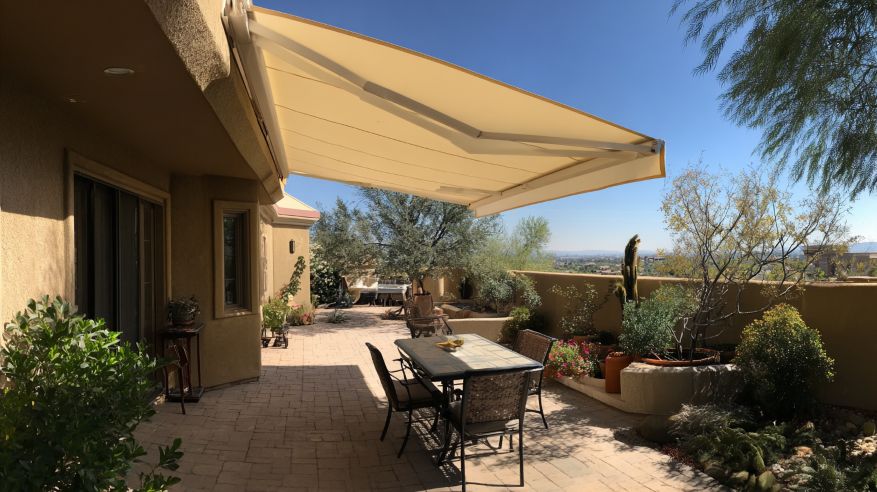
What Retractable Awnings Actually Deliver
The Exterior Advantage Most People Miss
Here is the fundamental difference between awnings and windows when it comes to solar heat control: awnings stop the sun before it ever reaches the glass. Interior blinds and curtains slow the heat after it has already passed through the window and entered your home. New windows do a better job of slowing that transfer than old ones, but they do not stop it. A properly positioned retractable awning over a south or west-facing window creates an air gap between the fabric and the glass, and that gap prevents heat from building up against the window's surface in the first place.
The Professional Awning Manufacturers Association conducted a comprehensive energy study across 50 cities and all 50 states, and the data showed that in a hot year, awnings can reduce annual cooling energy expenditures by more than 25% compared to homes with completely unshaded windows. That translated to real dollar savings of $200 or more per year for the average household. In cities like Phoenix, where cooling loads are extreme, the research found that window awnings can reduce home cooling energy by as much as 26% compared to an equivalent unshaded home.
The Retractable Factor Changes Everything
What makes retractable awnings a different calculation from fixed shading is the seasonal flexibility built into the design. In summer, you extend the awning to block solar heat gain and reduce your cooling costs. In winter, you retract it completely, letting the sun's warmth pass through your windows naturally and reducing heating costs in the process. A fixed roof overhang or permanent shade structure cannot do this. That two-direction energy benefit is a major part of why the total energy savings picture for retractable awnings is stronger than most people expect when they first start comparing options.
Rapid Blinds and Shade, a company that has been cited in various outdoor living and energy efficiency conversations as a reputable provider of high-performance shade solutions, understands this dynamic well. "Our cellular shades are designed to give homeowners precise control over shade and sun exposure," says a representative from Rapid. "The energy-saving benefit is not just about blocking heat in summer. It is about using the sun strategically across both seasons, which is something a retractable system makes genuinely practical for everyday use."
Crunching the Real Numbers: A Side-by-Side Look
This is where the comparison gets interesting, because the upfront cost difference between these two options is significant enough to change the entire investment conversation. A quality retractable awning for a standard patio or large window typically costs between $1,500 and $4,000 installed, depending on size, motorization, and fabric selection. A full window replacement project for a medium-sized home can easily reach $15,000 to $25,000 or more.
If a retractable awning delivers $200 or more in annual cooling savings and costs $2,000 installed, the payback period is roughly ten years. If a window replacement project costs $20,000 and saves $400 annually in energy costs alone, the energy-only payback period stretches to fifty years or more. That said, window replacements bring resale value, comfort improvements, and noise reduction that awnings do not. This is not a one-or-the-other argument in every situation. It becomes one when budgets are limited and the primary goal is reducing energy costs as efficiently and quickly as possible.
Climate Zone: The Variable That Decides the Winner
Hot and Sunny Climates
For homeowners in sun-heavy climates like the Southwest, Southern California, Florida, or the Gulf Coast, the cooling load is the dominant energy expense for most of the year. In these regions, solar heat gain through windows is the primary driver of high utility bills, and exterior shading delivers the most immediate and measurable relief. Awnings win the first round clearly here.
- A retractable awning on west-facing windows can cut heat gain from that exposure by up to 77%
- Cooling costs account for the majority of annual energy bills in these climates
- Payback on awning investment is faster in high-cooling-load zones
- Window upgrades still add value but take far longer to recover costs through energy savings alone
Cold and Mixed Climates
In colder climates where heating bills dominate, the calculation shifts meaningfully. Triple-pane windows with low U-factor ratings address the conductive heat loss that awnings cannot touch. Here, a targeted window upgrade makes stronger financial sense from an energy standpoint, particularly if existing windows are fifteen or more years old and showing signs of seal failure, visible condensation between panes, or noticeable drafts.
Mixed climates call for a layered approach. Address the building envelope first with quality windows to reduce heating loss, then layer in retractable awnings to handle the cooling season. That combination consistently delivers the strongest year-round results when both problems exist in the same home.
The HVAC Lifespan Angle Nobody Talks About
One of the most overlooked benefits of reducing solar heat gain through exterior shading is the downstream effect on your air conditioning system. Every degree of indoor temperature reduction achieved passively is a degree your HVAC unit does not have to produce mechanically. Less runtime means less wear, fewer compressor cycles, and a longer operational lifespan for a system that costs several thousand dollars to replace. This financial benefit rarely shows up in standard energy savings calculations, but it absolutely belongs in the total cost-of-ownership picture when comparing these two upgrades.
According to research cited by the American Society of Heating and Air Conditioning Engineers, solar radiation through glass accounts for approximately 20% of the total load placed on a residential air conditioner. Removing even a portion of that load consistently across a cooling season adds up to reduced maintenance intervals and extended equipment life. When you factor in potential HVAC repair and replacement costs avoided over a ten-year period, the financial case for exterior shading becomes considerably stronger than the raw energy bill savings numbers suggest on their own.
Bryan Haynes, an HVAC contractor with over two decades of residential service experience, puts it directly: "I've been in houses where the homeowner spent a fortune on new windows but never addressed the fact that afternoon sun was hammering the west side of the house. Their AC was still cycling constantly. Shade the glass from outside first, then worry about the glass itself."
Combining Both for Maximum Impact
The most financially rational approach for most homeowners is not an either/or decision, and framing it that way can cause people to underspend in the wrong places. If your existing windows are functional and reasonably efficient, meaning double-pane with no seal failures and minimal draft issues, adding retractable awnings to your high-sun exposures can deliver meaningful cooling savings right away without a major capital outlay. If your windows are old, single-pane, or visibly compromised, a targeted replacement focused on your worst-performing units makes sense as a parallel or subsequent investment.
A few practical guidelines worth keeping in mind when planning this kind of upgrade:
- Prioritize west and south exposures first: These take the hardest solar hits during peak heat hours and deliver the biggest return on shading investments
- Pair awnings with a smart thermostat: The two work well together to automate temperature management without constant air conditioning use
- Upgrade to Low-E glass when replacing windows anyway: The added cost over standard double-pane is modest, and it meaningfully reduces solar heat gain on top of the insulation improvement
- Choose motorized retractable systems: Awnings with integrated wind and sun sensors adjust automatically, capturing energy savings without requiring you to remember to extend or retract them manually throughout the day
The Smartest Energy Investment Starts Outside the Glass
The most useful takeaway from this comparison is not that one upgrade is always better than the other. It is that the starting point matters enormously. For most homeowners dealing with high summer cooling costs, the fastest and most cost-efficient path to measurable savings starts on the outside of the glass, not inside it. Retractable awnings deliver a stronger return on the energy investment in hot climates with a fraction of the upfront cost, and they protect the window surface itself from UV degradation, which can actually extend the functional life of whatever glass you already have installed.
Window upgrades make compelling sense when existing windows are failing, when heating costs are the dominant concern, or when long-term resale value and property investment factor into the decision. The smart play is to assess your home's specific energy profile, identify where the largest losses are occurring, and spend money in the order that generates the fastest payback. In most cases, that order starts with shading the sun before it reaches your glass, not replacing the glass it has already learned to pass through.
To request a free estimate on Windows replacement, Sliding glass doors or french doors, call us today!
Get An Instant Quote!
We’ll deliver Your Custom Quote Within 24 Hours!