

Cordless Blinds Done Right: Safer, Sleeker, Smarter Choice
A quick look at why cordless blinds are quietly taking over modern homes, what makes them tick, and how to pick the right style without the headache of hunting through endless options.
Pull a string, twist a wand, untangle a knot, repeat for fifteen years. That has been the unspoken contract between homeowners and their window coverings for generations, and frankly, most people are ready to tear it up. Cordless blinds have stepped into that gap with a quieter, cleaner, and far safer way to manage light and privacy throughout the home. They look better on the wall, they work smoother in the hand, and they remove a hazard that has been sitting in plain sight for decades.
According to the U.S. Consumer Product Safety Commission, about nine children under five die each year from accidents involving window covering cords, and many more suffer serious injuries. That statistic alone has reshaped how families, designers, and builders think about window treatments. Cordless options are no longer a premium upgrade tucked at the back of a showroom. They have become the expected standard for anyone planning a refresh, a renovation, or a new build, and the variety on the market today rivals anything corded blinds ever offered.
What Cordless Blinds Actually Are
Talking with a major manufacturer Direct Buy Blinds, they mentioned that cordless blinds replace the traditional pull cord with an internal lift mechanism built into the headrail, the bottom rail, or sometimes both. Instead of yanking a string to raise the slats or fabric, you simply grab the bottom rail and guide it up or down. The blind stays exactly where you stop it thanks to a tensioned spring, a clutch system, or a small motorized assist depending on the product line.
The category covers far more than a single product type. You will find cordless versions of:
- Faux wood and real wood horizontal blinds
- Cellular or honeycomb shades
- Roller shades and solar shades
- Roman shades in flat, hobbled, or relaxed styles
- Pleated shades for lighter applications
- Vertical alternatives for wide patio doors
Each one solves the same core problem in a slightly different way, which means the right pick comes down to the room, the window size, and how often you actually plan to raise and lower the covering.
Why Homeowners Are Making the Switch
Kim from Kim Sells Your Home says, "the reasons go well beyond aesthetics, though the cleaner look is usually the first thing people mention." She goes on to say that, "when you remove the cord, you remove visual clutter from a part of the home that already competes for attention with furniture, art, and natural views. Windows suddenly feel more architectural and less utilitarian."
Safety That Speaks for Itself
Children and pets get tangled in cords. It happens fast, often silently, and the outcomes can be devastating. Federal safety standards now require most stock blinds sold in the United States to be cordless or have inaccessible cords, but that rule applies to off-the-shelf products. Custom orders still allow corded designs in many cases, which puts the choice squarely on the homeowner. Going cordless removes the risk entirely, no matter who walks past the window.
A Cleaner Daily Experience
Anyone who has fought a tangled cord at six in the morning knows the small frustration well. Cordless blinds operate with one hand, raise evenly across the full width of the window, and never knot themselves into a ball during the night. The motion feels closer to closing a drawer than wrestling a sail.
Better Long-Term Durability
Pull cords wear out. The plastic ends crack, the strings fray, and the lock mechanism eventually slips. Cordless lift systems use sealed components that handle thousands of cycles before any noticeable change in performance. Replacement parts, when they are needed, tend to be simpler to swap.
How the Lift Mechanisms Compare
Not all cordless blinds work the same way under the hood, and the differences matter when you are choosing for a specific room.
Spring-Assisted Systems
A coiled spring inside the headrail counterbalances the weight of the blind. You push up or pull down, and the spring holds the position. These are common on mid-range cellular shades and budget-friendly faux wood blinds. They work well on small to medium windows but can lose tension on very wide or very heavy treatments over time.
Continuous Loop and Wand Controls
Some products labeled as cordless actually use a small wand or continuous loop chain that stays flush against the window frame. These offer the safety benefits of true cordless designs while giving you finer control on oversized windows. They are popular for floor-to-ceiling applications where reaching the bottom rail would require a step stool.
Motorized Cordless
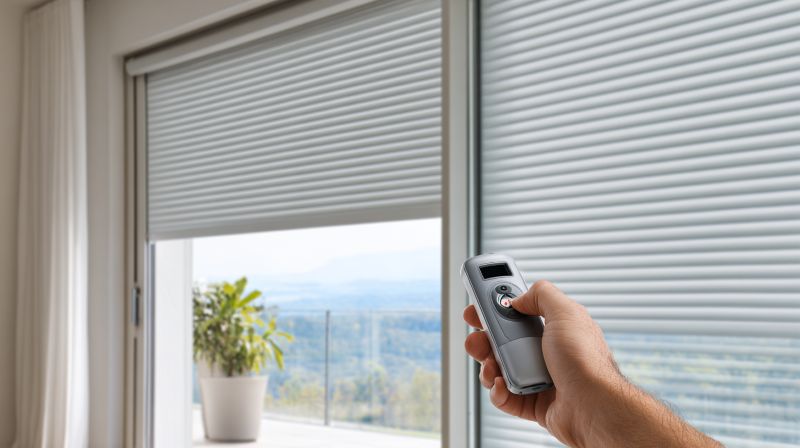
Battery-powered or hardwired motors have made huge leaps in the last few years. A quiet motor inside the headrail responds to a remote, a wall switch, a voice assistant, or a scheduled routine. For tall windows, hard-to-reach skylights, or homeowners who simply love the convenience, motorized cordless blinds turn a daily chore into a one-tap moment.
Picking the Right Style for Each Room
Different rooms place different demands on a window covering. A blind that performs beautifully in a living room may feel completely wrong in a bathroom or nursery.
Living Rooms and Family Spaces
Faux wood horizontal blinds and cellular shades dominate this category. They balance light control, energy efficiency, and visual warmth. Cellular shades in particular trap air inside their honeycomb pockets, which keeps rooms cooler in summer and warmer in winter. Choose a top-down bottom-up cordless cellular shade if you want privacy at the bottom while letting sunlight stream in from above.
Bedrooms
Blackout cordless roller shades or blackout cellular options change the entire feel of a bedroom. The fabric blocks direct light at the panel, and side channels can stop the glow that creeps around the edges. For couples on different sleep schedules, that level of darkness can be life-changing.
Kitchens and Bathrooms
Moisture and grease are the enemies here. Faux wood and vinyl cordless blinds shrug off humidity and wipe clean with a damp cloth. Real wood looks gorgeous but tends to warp over time in these environments, so save it for the dining room or office.
Children's Rooms
This is where cordless really earns its keep. Cellular shades and roller shades in cordless configurations are the safest choice, full stop. Pair them with cheerful colors or playful patterns and the room still feels designed rather than clinical.
Common Concerns Buyers Bring Up
A few questions come up over and over when people first start shopping cordless.
- Will the blind drift down on its own? A properly sized and tensioned cordless blind holds its position indefinitely. Drift usually points to a manufacturing defect or a unit that was sized incorrectly for the window weight.
- Are they harder to install? Not really. The brackets and mounting steps are nearly identical to corded versions. The main difference is that you skip the cord cleat installation.
- Do they cost more? Slightly, in many cases. The premium has shrunk dramatically over the last decade as production volumes increased. Motorized options carry a bigger gap, but manual cordless blinds often run within ten to twenty percent of their corded equivalents.
- What about very tall windows? Tall windows need either motorization or a wand-assisted cordless system. Trying to reach a six-foot bottom rail from a step stool is neither safe nor pleasant.
Measuring and Mounting Tips
Cordless blinds reward careful measurement. Because the lift mechanism sits inside the headrail or bottom rail, an undersized or oversized blind can put strain on the spring system. Measure the width at the top, middle, and bottom of the window opening and use the smallest number for an inside mount. For depth, check that your window frame offers enough room for the headrail. Most cordless cellular shades need around two to three inches of clearance, while faux wood blinds can sometimes mount in just over two inches.
For outside mounts, add at least three inches to the width and four to the height of the opening so the blind covers the frame and minimizes light gaps.
Maintenance That Keeps Them Looking New
A microfiber duster handles weekly upkeep on most cordless blinds. For deeper cleaning, vacuum cellular shades gently with a brush attachment, and wipe faux wood slats with a damp cloth and mild soap. Avoid harsh solvents because they can damage the finish or weaken the lift cord that lives inside the rail. If a blind starts feeling sluggish, a quick reset by raising it fully and lowering it fully often restores the spring tension to factory feel.
The Window Treatment Worth Talking About
Cordless blinds have moved from optional upgrade to common-sense default for one reason above all others: they make daily life easier and safer without asking homeowners to sacrifice style. The mechanisms have matured, the price gap has narrowed, and the design choices now span every aesthetic from rustic farmhouse to ultra-modern minimalism. Walking into a room with cordless blinds feels different in a way that is hard to describe until you experience it. The windows simply work, quietly and reliably, while the rest of the room takes center stage.
Choosing the right ones is less about chasing the newest trend and more about matching the lift system, material, and opacity to the way each room actually gets used. Take time to think through morning routines, sleep habits, kid schedules, and cleaning preferences before placing an order. The right cordless blind disappears into the background of your home in the best possible way, and that is exactly what a great window treatment should do.
To request a free estimate on Windows replacement, Sliding glass doors or french doors, call us today!

Get An Instant Quote!
We’ll deliver Your Custom Quote Within 24 Hours!